
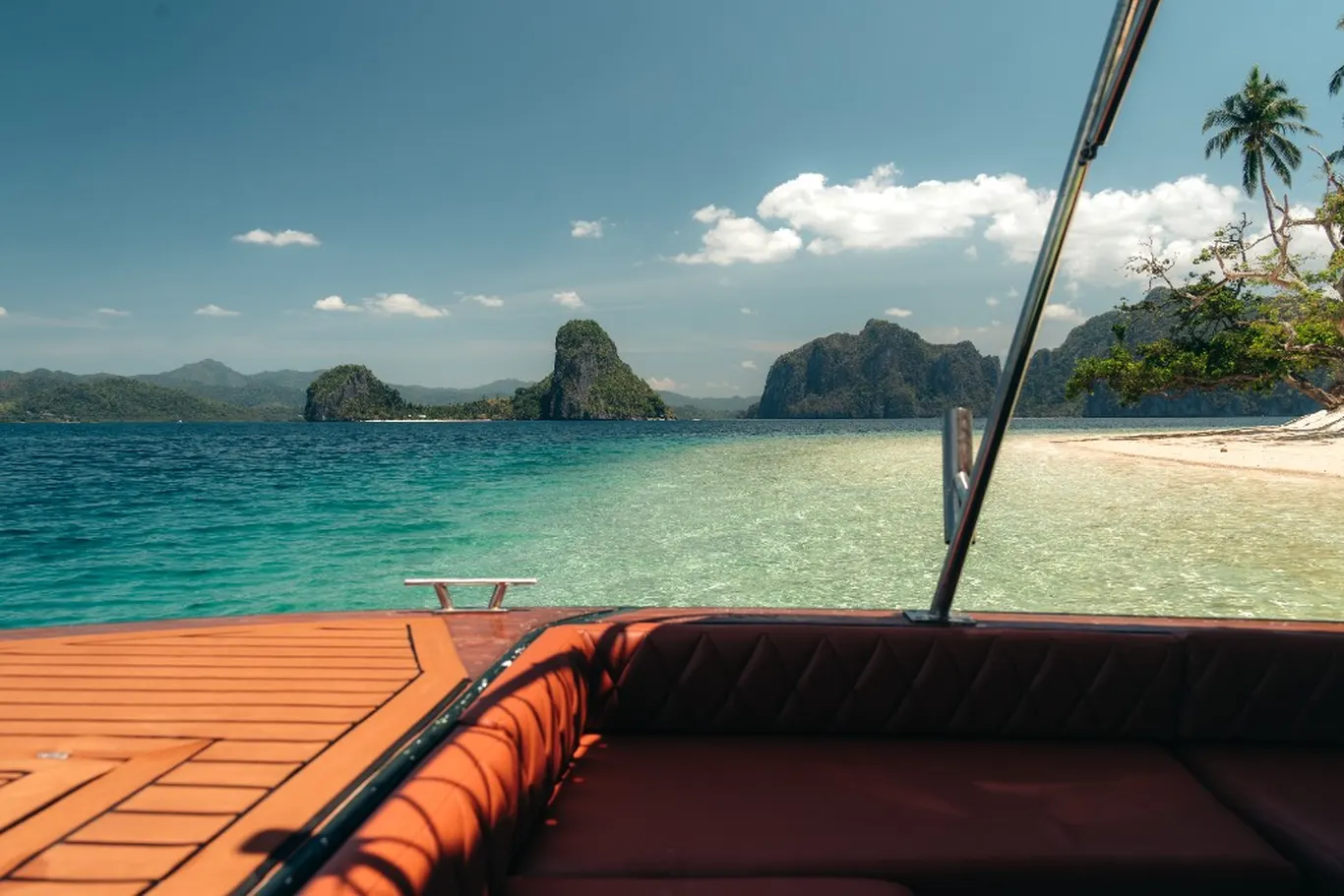
El Nido. The Bacuit Bay travel guide, written from El Nido.
Towering limestone karsts. Hidden lagoons. Powder-white beaches reachable only by boat. Here is what to see, when to come, and how the locals actually do it — written by a Filipino-owned tour operator based in Brgy. Corong-Corong.
El Nido is a coastal municipality at the northern tip of Palawan island in the western Philippines. It is famous worldwide for Bacuit Bay — a 45-island archipelago of limestone karst towers rising straight out of turquoise water, sheltering hidden lagoons, secret beaches, and one of the most photographed coastlines in Southeast Asia.
The areas of El Nido
El Nido Town (Brgy. Buena Suerte / Masagana)
The original town centre. Walkable, buzzing, full of restaurants, dive shops, and tour offices. Wake up to roosters and tricycles. Best for travellers who want to be in the middle of everything and within 5 minutes of the main pier.
Corong-Corong (where we are based)
A 5-minute tricycle ride south of town. Long sunset-facing beach, calmer pace, mid-range and boutique hotels. Best base for boat tours — most pickup boats launch from this beach.
Las Cabanas Beach
One bay further south. Famous for the long flat sand bar at low tide and the postcard sunset view toward Cadlao Island. Walkable to Corong-Corong.
Lio Beach (the airport area)
Master-planned beach resort area beside El Nido Lio Airport, 4 km north of town. Quieter, polished, more expensive. Great if you want to fly in, drop bags, and be on the sand within 10 minutes.
Nacpan Beach
A 4 km curve of golden sand 45 minutes by tricycle north of El Nido town. Worth a half-day trip for anyone staying 3+ nights.
The islands you came for
The classic El Nido island-hopping tours (A, B, C, D) cover Bacuit Bay, but the real geography is more interesting than the lettered loops suggest. The islands and attractions most worth your time:
- Big Lagoon — the iconic vertical-walled lagoon at Miniloc Island. Best at high tide for kayaking. Quota-limited; arrive early.
- Small Lagoon — entered through a low cave opening at low tide. Snorkel inside cathedral-quiet water.
- Secret Lagoon — a hidden pool inside Miniloc Island reached through a chest-high gap in the rock.
- Pinagbuyutan Island — three perfect coves, fine white sand, the postcard cone-shape karst. One of our favourite lunch stops.
- Helicopter Island (Dilumacad) — long curved beach, easy snorkel reef just offshore.
- Matinloc Shrine — abandoned Spanish-era chapel with a viewpoint over the bay. Atmospheric.
- Hidden Beach — wrapped in karst walls, accessible only through a narrow rock channel at low tide.
- Snake Island — sandbar that snakes between two islands; spectacular aerial.
- Shimizu Island — calm reef snorkel, lunch beach.
- Cadlao Island — the largest island in the bay, with hidden coves on its far side that the standard tours don't reach.
- Cudugnon Cave — pre-colonial archaeological cave site on a quiet beach.
When to visit El Nido
The Philippines has two seasons. Both can be beautiful in El Nido.
- Dry season (Nov–May) — calm seas, clear water, predictable sunshine. Peak demand and pricing from December through April. Book accommodation and tours 4–8 weeks ahead.
- Green / wet season (Jun–Oct) — bursts of tropical rain, often in late afternoon, with long stretches of calm sunny mornings. 50% fewer travellers, lower prices, and on most days every island is open. Avoid mid-September if a typhoon is forecast.
- Sweet spots — first half of May, second half of November, last week of June.
How to get to El Nido
- Fly direct — AirSWIFT flies daily from Manila (NAIA Terminal 4) to El Nido Lio Airport. Flight time ≈ 75 minutes. The fastest option, often cheaper than people assume in shoulder season.
- Fly to Puerto Princesa + van/car — multiple carriers fly Manila and Cebu to Puerto Princesa. From there it's a 5–6 hour van transfer (≈ ₱700 per seat shared, or ≈ ₱8,000 private). Scenic drive but long.
- Ferry from Coron — Montenegro / 2GO run a fast ferry on most days, ≈ 4–5 hours. Cancellable in rough weather.
- From Coron via island expedition — the most spectacular way to arrive. We run the route ourselves: 3 Days 2 Nights El Nido to Coron Expedition.
What it costs
- Accommodation — hostels ₱600–1,200, mid-range hotels ₱2,500–6,000, boutique ₱8,000+, resort islands ₱25,000+
- Boat tours — joiner tours ₱1,500–2,500 per person, premium shared ₱9,500 per person, fully private speedboat from ₱38,000 per day for 1–8 guests
- Eco fee — ₱200 per person, valid 10 days
- Tricycle around town — ₱50–150 depending on distance
- Meal at a local Filipino spot — ₱200–400
Tours we operate from El Nido
Premium Private Speedboat
Fully private charter of an entire speedboat. Flexible custom route, hotel pickup, captain and host, meals included.
Plan a day →Semi-Private Speedboat
Small-group speedboat sharing across Bacuit Bay. Faster, drier, and more comfortable than traditional bangka day tours.
See itinerary →3 Days 2 Nights to Coron
The full island crossing from El Nido to Coron via the Linapacan archipelago. Three days, two overnight beach camps, one unforgettable route.
Read the route →El Nido travel FAQs
When is the best time to visit El Nido?
The dry season runs roughly November through May. December to April has the calmest seas and best snorkelling visibility but is peak season. May and early June often have the best weather-to-crowd ratio. June through October is green season — fewer crowds, lower prices, and many beautiful calm days punctuated by short tropical showers.
How do I get from Manila to El Nido?
The fastest route is a direct AirSWIFT flight from Manila (NAIA Terminal 4) to El Nido Lio Airport, about 75 minutes. Alternatively, fly to Puerto Princesa and take a 5–6 hour van transfer (≈ ₱700 per seat) or a private car. From Cebu, fly to Puerto Princesa via Manila.
Is El Nido better than Coron?
They are different. El Nido is famous for towering limestone karst islands, secret lagoons, and powdery beaches. Coron is famous for World War II Japanese shipwrecks, dramatic freshwater lakes between karst cliffs, and crystal-clear visibility. Many travellers do both via our 3 Days 2 Nights El Nido to Coron Expedition, which crosses the Linapacan archipelago between them.
How many days do you need in El Nido?
Three to four full days is the sweet spot — one private or shared tour day in Bacuit Bay, one day for hidden beaches and the outer islands, and one buffer day for weather, rest, or land-based activities like Nacpan Beach. Five days lets you add a Linapacan day trip or the 3D2N expedition to Coron.
What is the ₱800 environmental fee?
El Nido collects a ₱200 per person Eco-Tourism Development Fee, valid for 10 days. Coron collects a separate fee. For our 3D2N expedition, a combined mandatory fee of ₱800 per person covers environmental and port fees across all islands visited. It is regulated by the local government units (LGUs) and paid in cash on arrival.
Where to next
- Coron travel guide — the other half of northern Palawan, just a 3-day island crossing away.
- About Sea Tours Palawan — who we are and why we operate this way.
- Partnerships — Seatours Palawan and our operational alliances.